



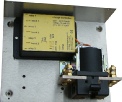
Units are supplied pre-assembled, with both contactor and control unit waterproof to IP66.
These units are pre-assembled on a stainless steel mounting plate, employing the same 4 core data cable to inter-face the display as the smaller units. The module features latching contacts, giving zero coil current during power isolation, operates from either 12 or 24 volt DC supply and has manual over-ride.

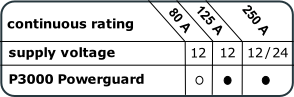
- 80 and 125 amp, 12 volt contactors are sealed to IP66.
- all trip and re-set voltages are user adjustable, 4 minute trip delay.
- all units are pre-assembled, custom systems can be supplied, 12 - 48 volt DC.
- remote full feature control panel with voltmeter.
- 250 amp module has manual over-ride, 12 or 24 volt DC operation.
- electronics and coils protected by PTC fuses auto reset.
remote control and monitoring of :-
- audio / visual trip alarm.
- audio alarm mute.
- timed over-ride.
- manual system engage.
- system off.
- 10 bar bar-graph voltmeter.


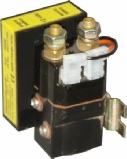


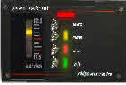
provides protection from high load equipment flattening the service battery, extends battery life, while also maintaining a power reserve for critical equipment. Designed in 1982 by Kdd, despite the many claims made by the competition, the original unit had a 20 amp capacity relays and simple LED display. To-day contactors replace the relays, providing greatly increased capacity, with manual over-ride on the 250 amp unit. The remote control panel includes a bar-graph voltmeter to monitor battery use and power reserve, plus audio / visual trip alarm, with alarm mute.
This only requires fitting a 4 way data cable to link the control module to the display.


